

Learn more about cervical cancer and treatment options.
What is it?
This cancer begins in the cervix. The cervix opens into the vagina.
It is made up of two types of cells. Squamous cells protect the outside of the cervix and glandular cells which produce mucus and the fluid present during ovulation.
When either of these cells is abnormal, cervical cancer is caused.
Symptoms
Pap smear tests are recommended since cervical cancer does not have symptoms.
There are no signs until the cells turn into cancer and spread to the cervix and other pelvic organs.
Common Symptoms include
- Pain during sex
- Abnormal vaginal bleeding
- Abnormal vaginal discharge
- Vaginal odor
Diagnosis
A pelvic exam is done to determine a healthy cervix or human papillomavirus (HPV) test. If the results are abnormal, the doctor performs a biopsy. A small sample of tissue is removed to look for cancer cells.
If cervical cancer is diagnosed the next step is to seek care from a gynecological oncologist. These doctors have specialized training in the treatment of gynecological cancer.
Treatment
The stage of cancer determines the treatment. Additional tests may be required to assess the spread of cancer. This is done to determine the right cause of treatment.
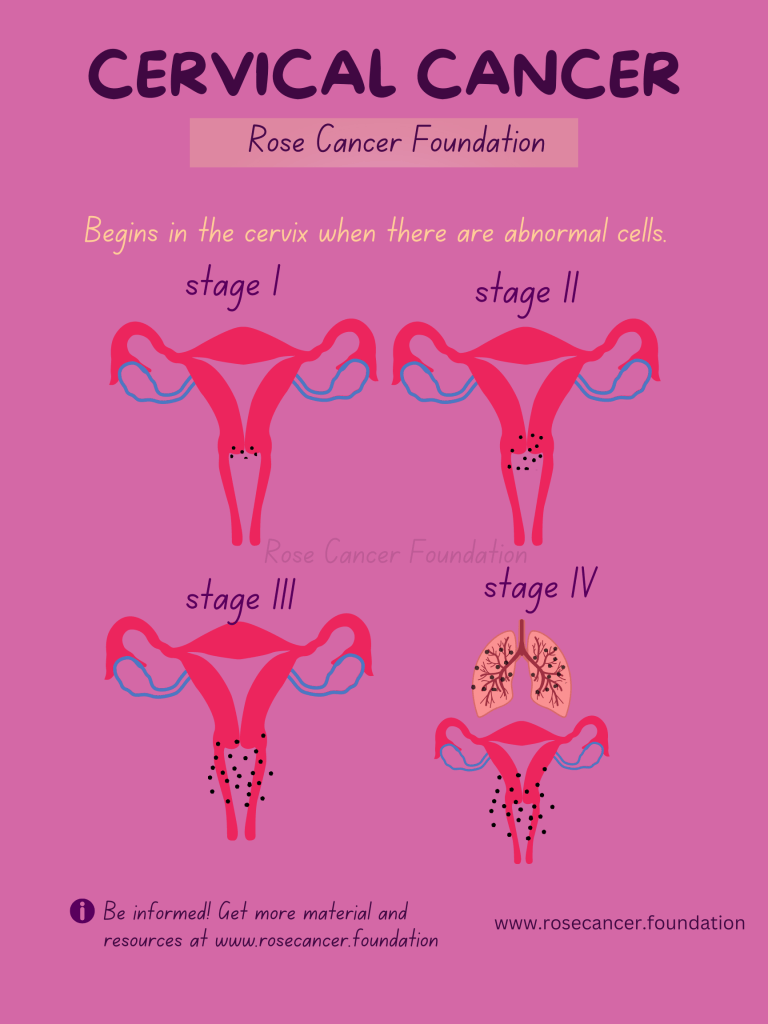
stages of cervical cancer
The cancer is categorized according to the size it appears under the microscope. From I,II,III and IV.

 rosecancer.foundation